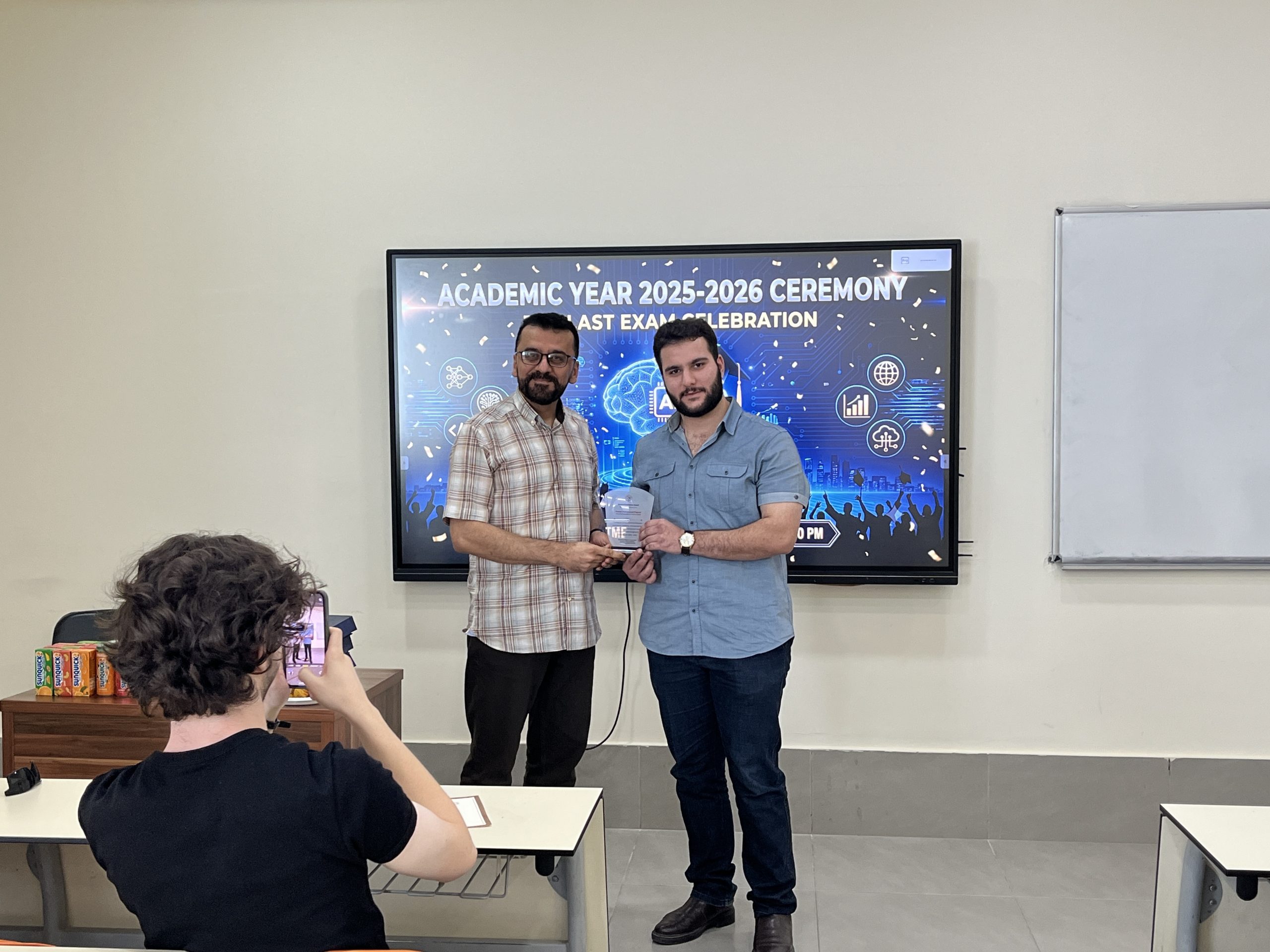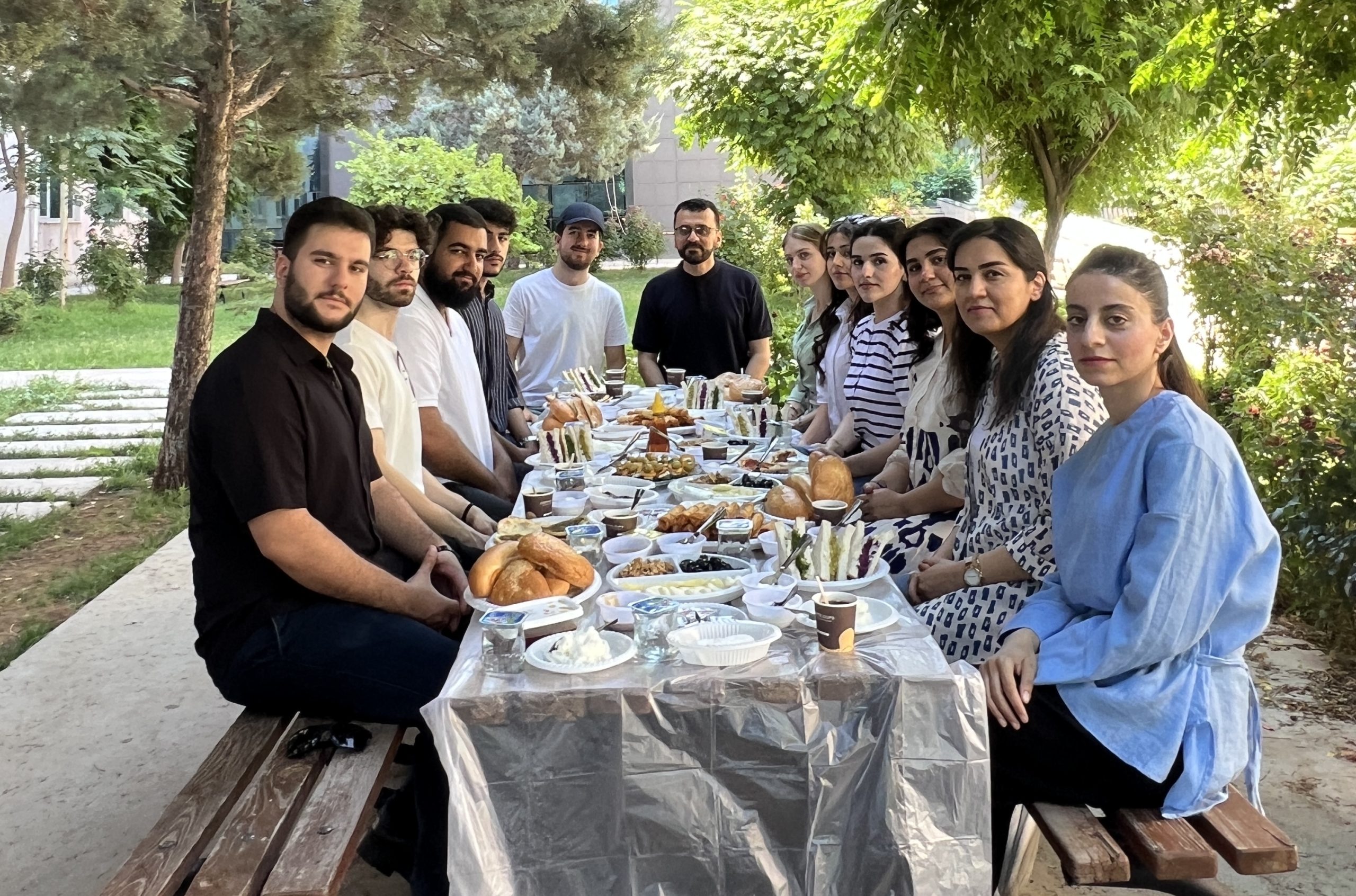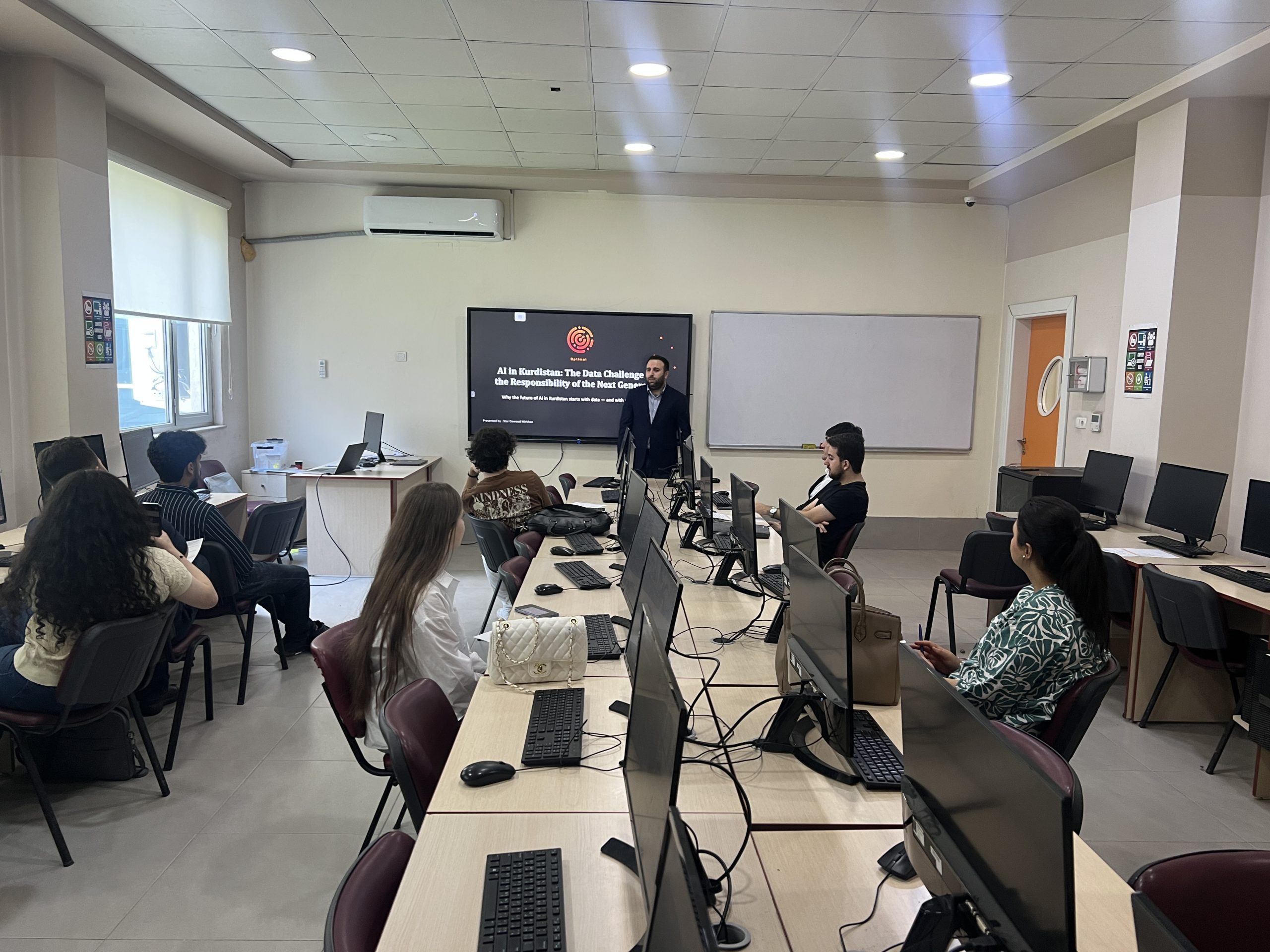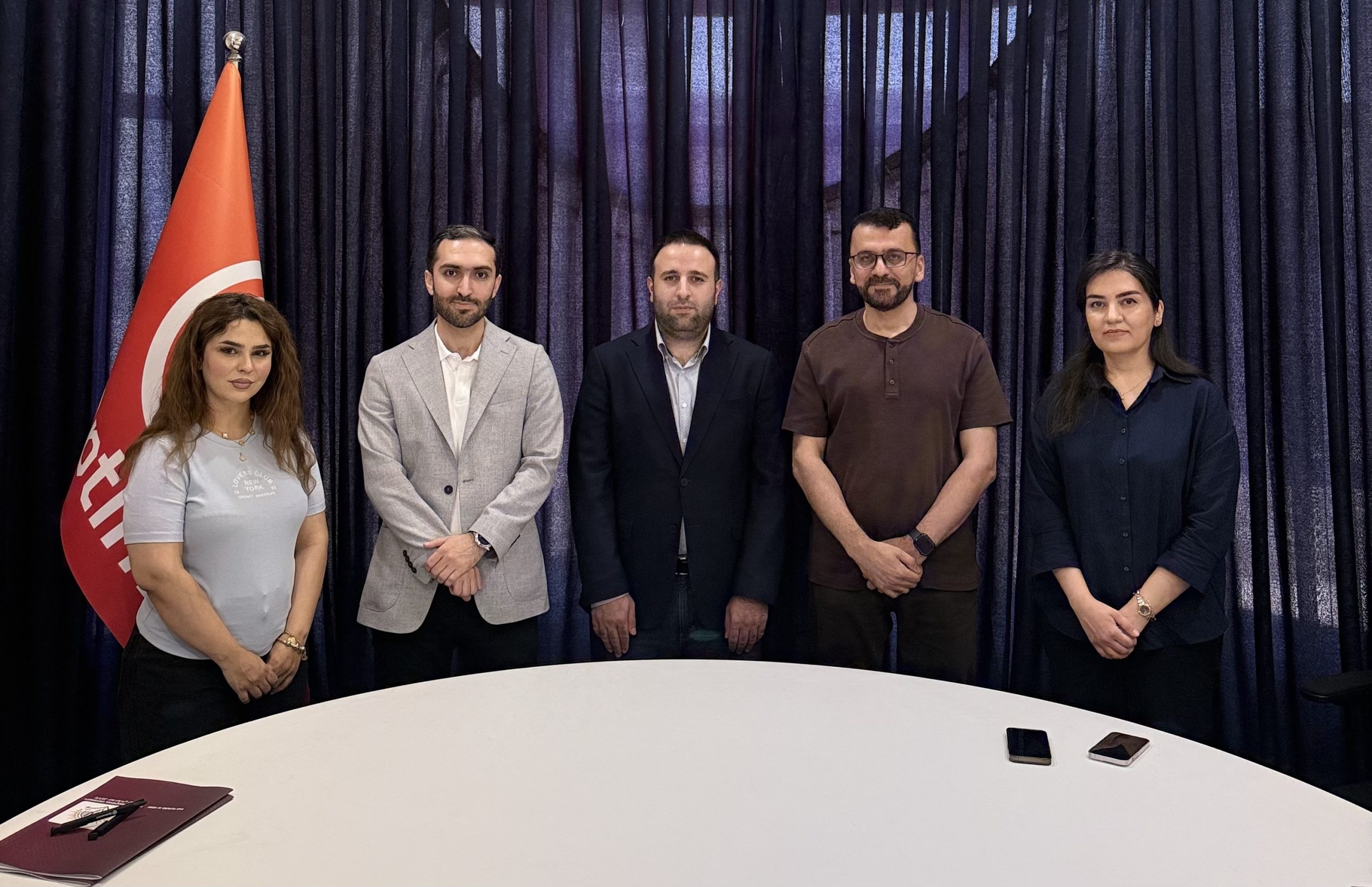

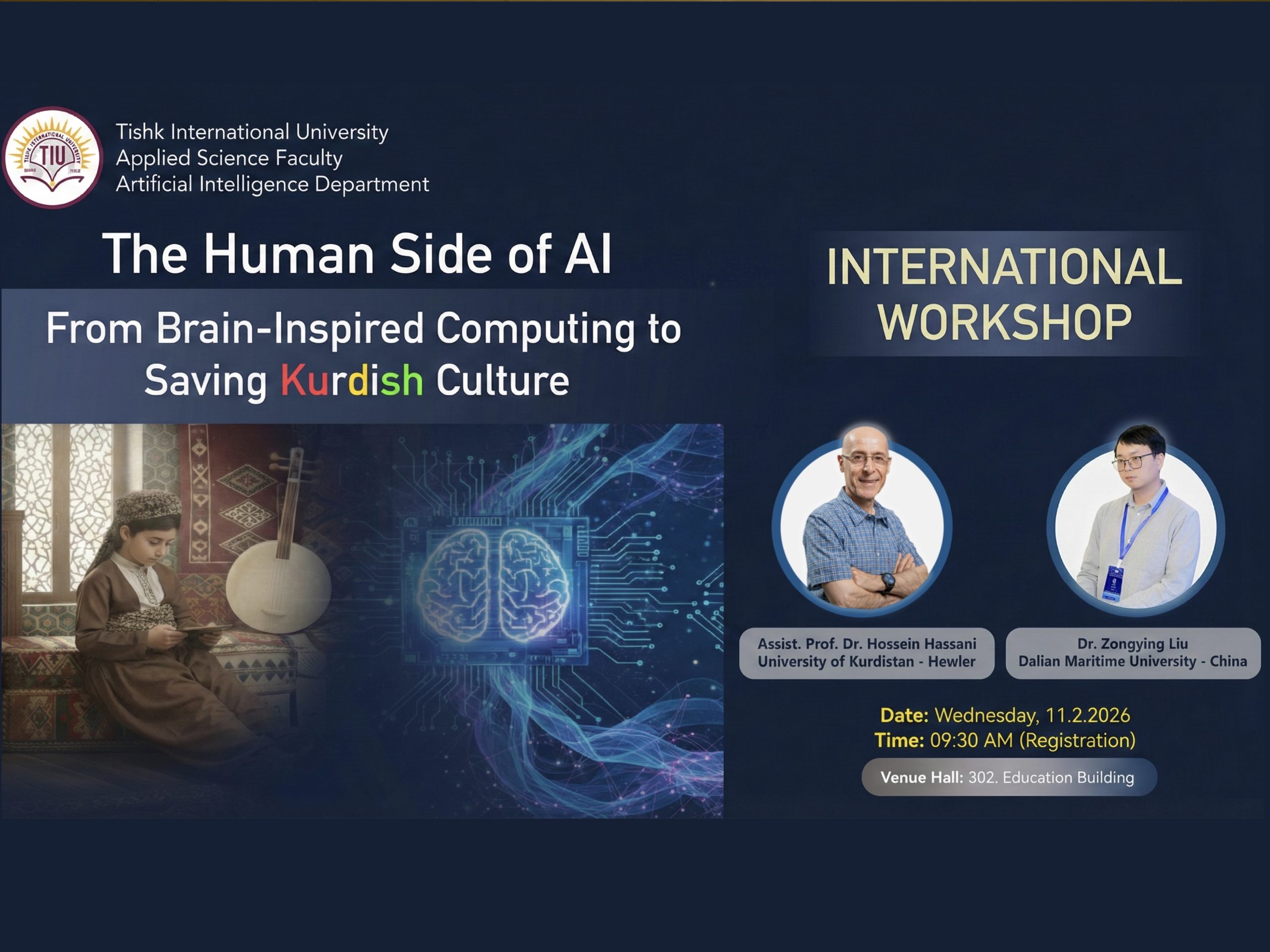
On February 11, 2026, the Department of Artificial Intelligence at the Faculty of Applied Science at Tishk International University hosted an international workshop titled “The Human Side of AI: From Brain-Inspired Computing to Saving Kurdish Culture”. Held at the Education Building, Hall 302, the event gathered over 80 participants, including researchers and educators, to discuss how rapidly evolving technology can align with human values. The workshop aimed to move beyond viewing AI solely as a technical tool, positioning it instead as a bridge between computational innovation and societal needs.
The core focus of the event was examining Artificial Intelligence through a human-centered lens. Discussions explored how computing models that draw inspiration from the human brain can contribute to more efficient systems, while simultaneously addressing the preservation of underrepresented cultures. A significant portion of the workshop was dedicated to understanding how these intelligent technologies can support the growth and protection of the Kurdish language and heritage, ensuring that cultural identity thrives alongside technological progress.
Two distinguished experts led the sessions, offering a “cross-cultural technical synthesis” that connected global theories with local applications. Assist. Prof. Dr. Hossein Hassani from the University of Kurdistan Hewler presented on the challenges and opportunities involved in using AI to preserve Kurdish culture. He was joined by Dr. Zongying Liu from Dalian Maritime University in China, who provided deep technical insights into reservoir computing-based algorithms, specifically highlighting their practical application in water level detection.
The workshop concluded with valuable outcomes regarding the ethical and social responsibilities of Artificial Intelligence development. Participants engaged in a multidisciplinary knowledge exchange, establishing a shared understanding that AI should respect human intelligence and identity. By combining brain-inspired mechanics with cultural preservation strategies, the department successfully highlighted a framework where intelligent systems are designed to solve real-world challenges responsibly.