
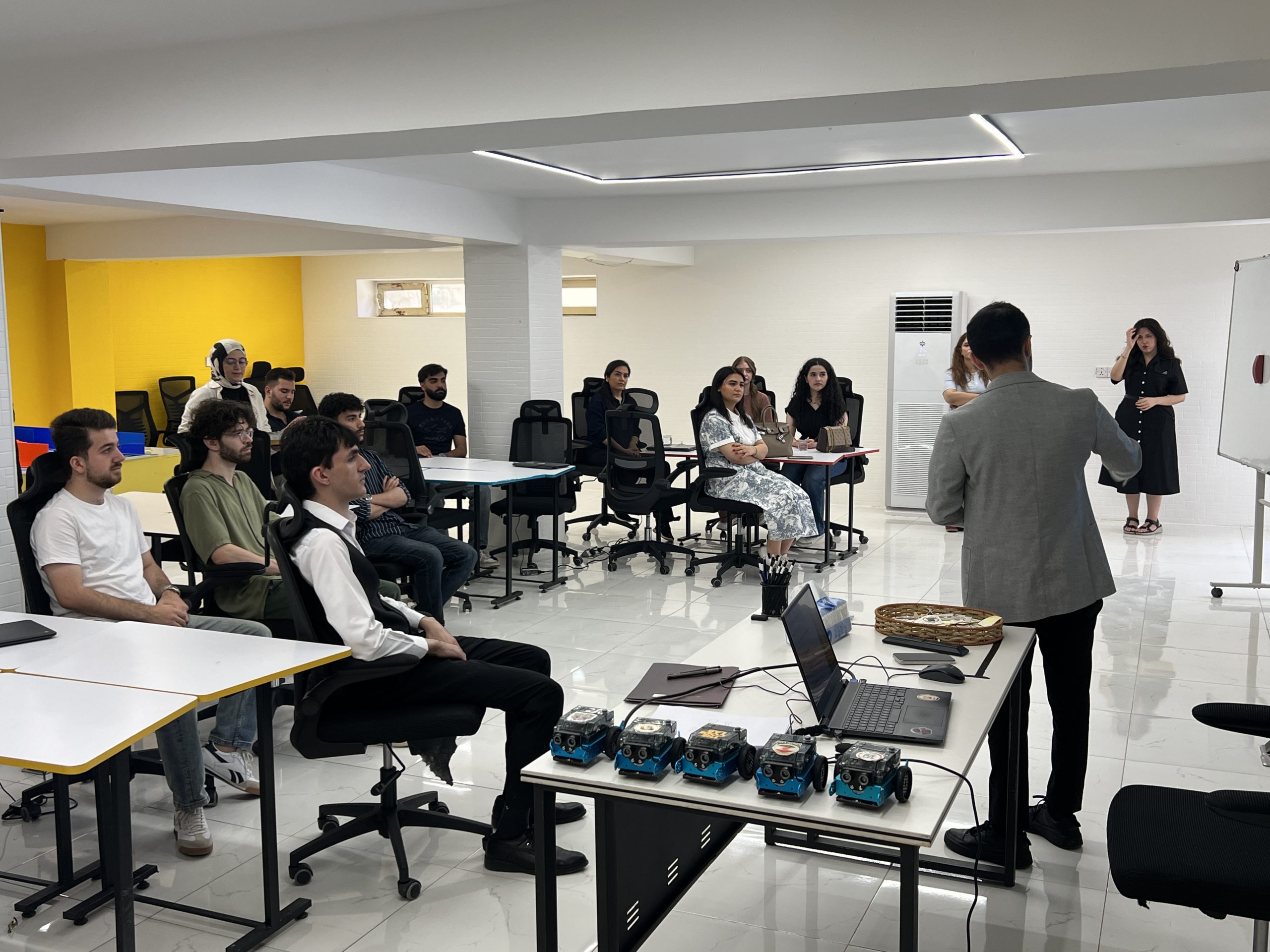
On June 8, 2026, the Artificial Intelligence Department at Tishk International University organized a scientific field trip to the Code Lab in Erbil, an educational institute focused on empowering children and young learners through coding and technology. The first-year students in the AI department visited the Code Lab under the supervision of Dr. Hemin Ibrahim and Ms. Soma Solaiman, as part of the department’s continuous effort to give students exposure to practical, community-facing applications of their technical knowledge.
The Code Lab works to introduce kids to computational thinking, programming, and digital tools through interactive, project-based learning, helping build a generation that is confident and capable in technology from an early age.
The students were welcomed by Mr. Rebin Mohammed, who guided them through the institute’s facilities and gave them a closer look at how the institute operates and delivers its programs.
The program included two main parts:
- An introductory session on the Code Lab, covering its background, mission, teaching methodology, and the role it plays in nurturing young talent in coding and technology.
- A practical lecture on robot programming, where students worked directly with robotics kits, writing code to control the robots’ movement and behavior. This gave students a chance to put programming concepts into practice in a physical, interactive way.
During the visit, students also had the chance to interact with Code Lab’s team, discussing teaching approaches for young learners and exploring how their own background in AI and programming could support similar youth-focused tech education efforts.
The scientific trip also contributed to the achievement of several United Nations Sustainable Development Goals (SDGs), particularly SDG 4 (Quality Education) by providing practical learning opportunities, SDG 8 (Decent Work and Economic Growth) by developing future workforce skills, SDG 9 (Industry, Innovation and Infrastructure) by promoting innovation and technological learning, and SDG 17 (Partnerships for the Goals) through collaboration between academia and industry.
Overall, the trip gave AI students a meaningful opportunity to step outside the classroom, see how coding skills translate into real tools for education and innovation, and reflect on the broader impact their field can have on the community.