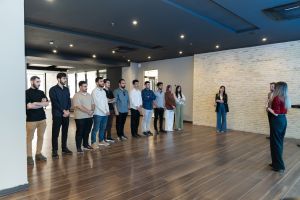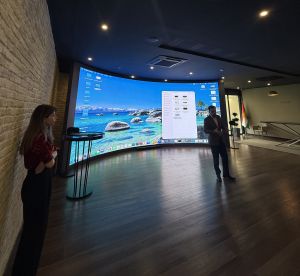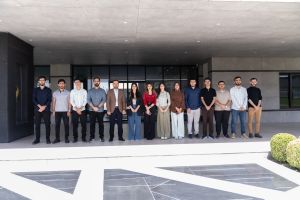
On May 5, 2026, as part of its commitment to connecting academic learning with real-world experience, the Cybersecurity Department at Tishk International University organized an educational visit for second-year students to the Kurdistan Regional Government Department of Information Technology under the supervision of Miss Sivan Haji. The visit aimed to provide students with practical exposure to government digital services and the ongoing digital transformation initiatives within the Kurdistan Region. Upon arrival, the students were warmly welcomed by Miss Rivan Bazaz and Mr Dana Balisani, who introduced the delegation to the department’s mission, responsibilities, and current technological projects. During the visit, students explored how advanced technologies are being used to modernize government operations and improve public services across the region. The delegation was introduced to several digital platforms and smart systems developed by the department to simplify governmental procedures, reduce bureaucracy, and enhance efficiency for citizens within the Kurdistan Regional Government (KRG). Students also toured multiple technical divisions and gained insights into ongoing projects related to digital identity systems, secure infrastructure, data management, and government service platforms. The experience allowed students to bridge the gap between theoretical cybersecurity concepts and practical implementation in large-scale governmental environments. Through direct interaction with IT professionals and technical teams, students developed a deeper understanding of how cybersecurity, networking, and information technology contribute to secure digital transformation and modern governance.
In addition, the KRG-DIT professionals shared valuable career advice and professional experiences with the students, encouraging them to continue developing their technical, analytical, and practical skills to prepare for future careers in cybersecurity and information technology. The visit also reflected important principles of the United Nations Sustainable Development Goals (SDGs), particularly SDG 4: Quality Education, SDG 9: Industry, Innovation, and Infrastructure, and SDG 17: Partnerships for the Goals, by strengthening collaboration between academic institutions and government organizations while promoting experiential learning opportunities. Overall, the educational visit was an inspiring and informative experience that provided students with valuable industry exposure and a clearer vision of how their academic studies can contribute to building a smarter, more secure, and digitally empowered society.