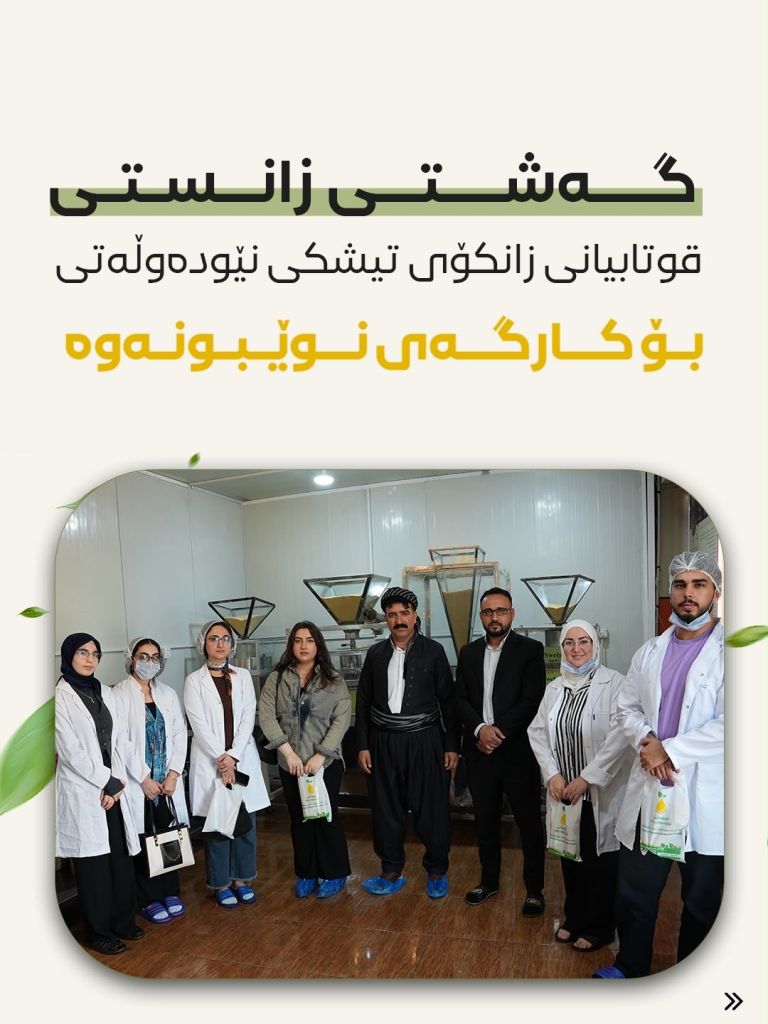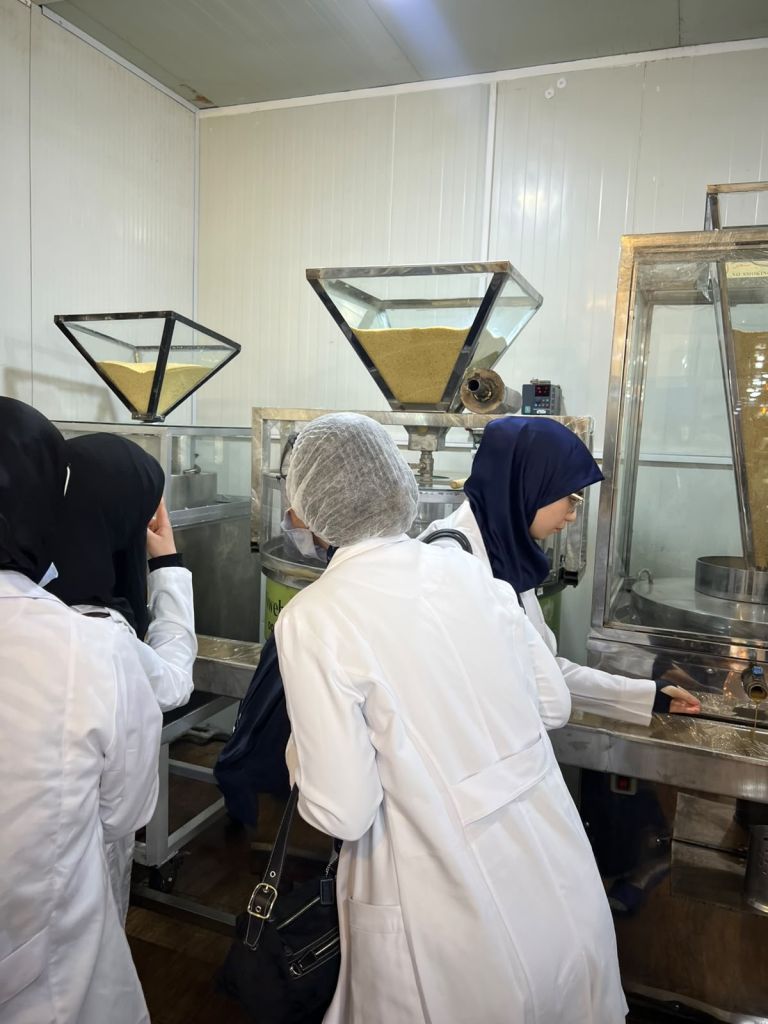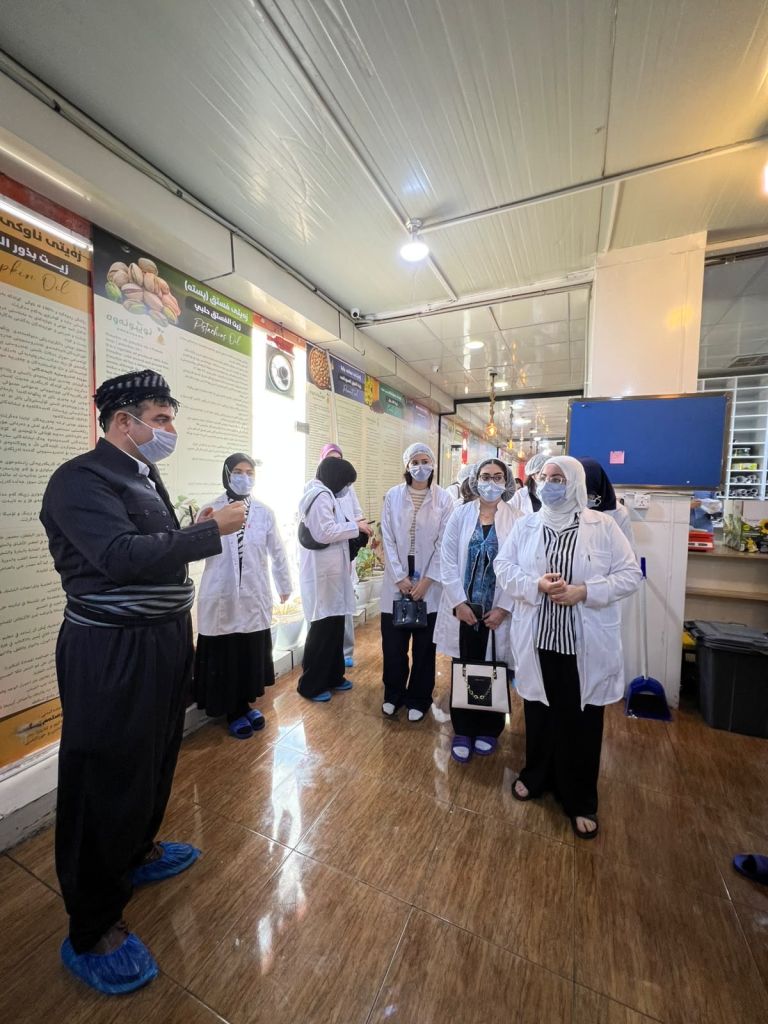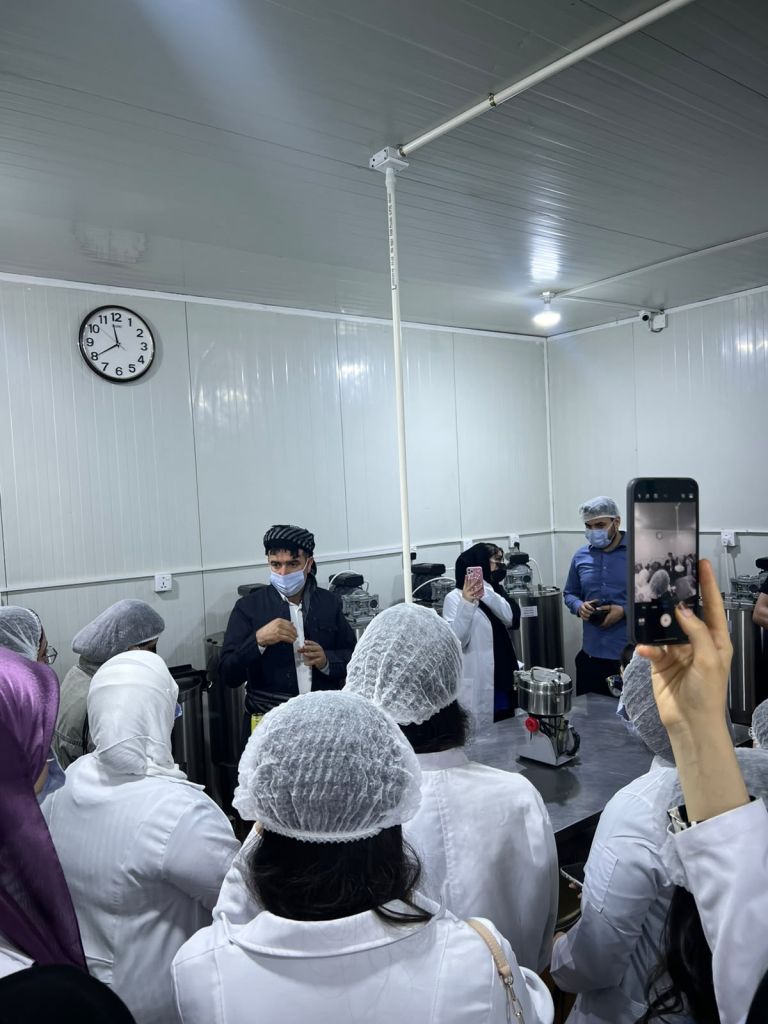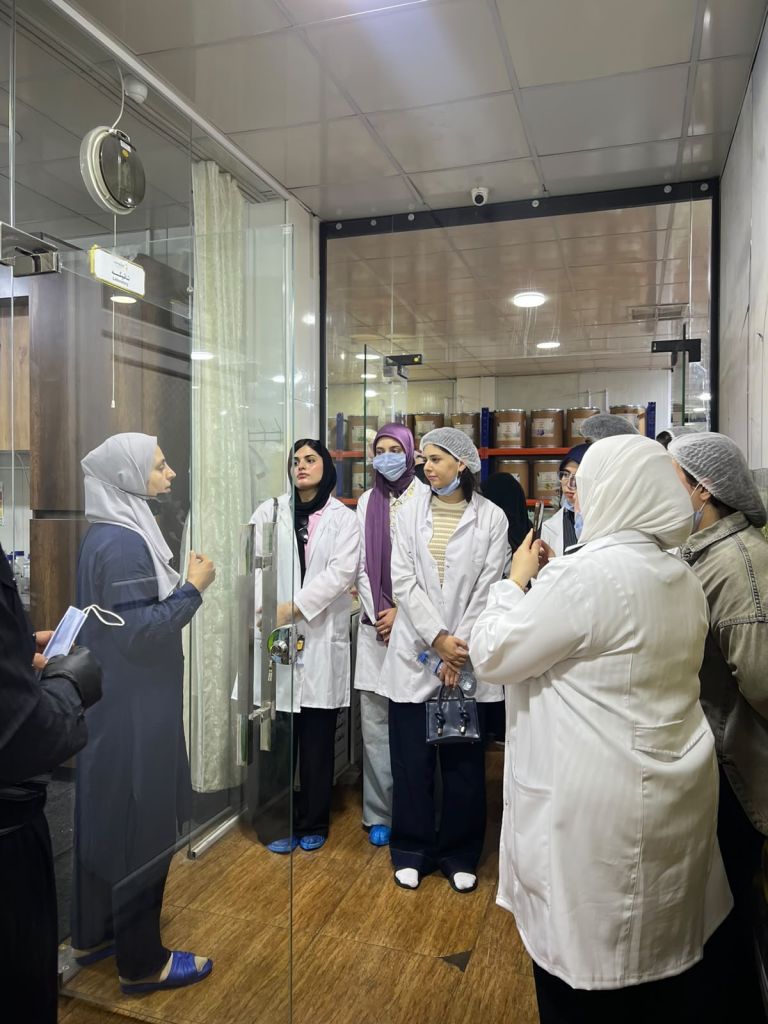
On April 26, 2026, the first stage Nutrition and Dietetics students ventured into the industrial food sector during an educational field trip to the Nwebunawa Factory. Organized and supervised by research assistant Ms. Alla Faris, this excursion was designed to give the freshman class an engaging, early look at how theoretical food science operates on a commercial scale. The day began with a very welcoming reception from the factory’s general manager, Mr. Baxtyar, who greeted the students and the teaching staff with great hospitality before personally taking charge of the group and leading them on a comprehensive, step by step tour right through the main production floor.
From Farm to Table: Processing, Safety, and Storage
During the walkthrough, Mr. Baxtyar carefully mapped out the entire lifecycle of the factory’s product lines, explaining the whole timeline from the initial raw sourcing at the farm level all the way to processing, packaging, and the final delivery onto the consumer’s dinner table. Along the processing line, the students were able to see exactly how professional food handlers maintain strict hygiene standards to prevent contamination. Mr. Baxtyar also focused heavily on product safety protocols and explained the highly specific storage conditions such as exact temperature, humidity, and environmental controls needed to keep different types of food products fresh, safe, and rich in nutrients before they are shipped out to the market.
Bridging the Market and the Future Role of Nutritionists
Before wrapping up the visit, the factory management team sat down with the group to discuss the business and commercial sides of the industry, sharing some food marketing techniques and explaining how products are successfully launched into competitive markets. More importantly, they opened up a highly motivating conversation about how these students can fit into this massive industry as future professionals. Mr. Baxtyar and his team highlighted how vital trained nutritionists and dietitians are to modern food manufacturing companies, emphasizing that the industry heavily relies on nutrition experts for developing healthier product recipes, auditing food safety regulations, managing quality control, and ensuring that commercial foods meet proper public health standards. By the end of the day, the students left the facility with a lot of practical insights, a deeper understanding of their studies, and a much clearer picture of the diverse career paths waiting for them in the food and dietary sectors.
Keywords: Student field trip, Nwebunawa Factory, Nutrition and Dietetics, food processing, career paths, TIU.